

Lessons from four new-to-me vintage children's books
And how they're helping shape my own stories for kids 📕

This year, I’ve borrowed 150-ish picture books from libraries,1 studying prose and page turns and learning what makes a story savory when others lack texture, flavor, and umami. It’s been a wonderful practice.
I’m discovering the sorts of books I hope to write for kids, and perhaps just as exciting, which books my inner child finds scrumptious. (The two are usually the same.) I can be a picky eater and reader, but when I find something tasty, I promise I will sing its praises!2
Part of my homework is to understand what the current publishing world is like, which means many of the picture books I’m reading and studying were born in the last five to ten years. Since I’d love to be traditionally published one day, I’ve got to get a grasp of the industry’s ins and outs, whether I agree with it all or not.3
But my favorite “research” lately has to do with older stories. This interest started in the spring after I visited my library’s book sale and scooped up $1 vintage treasures. And then, Aaron took me on a darling date where we visited, reviewed, and donated to Little Free Libraries he’d mapped out for us. On that trip, I picked up a few books from decades past. I especially liked the 1958 copy of Curious George Flies a Kite. It’s slightly faded, well-loved, and perfectly midcentury.
So I guess that’s how I accidentally developed a new hobby—collecting vintage children’s books!4
Today, I wanted to share what four of these books have taught me about making stories for kids. I hope you enjoy!
—E.T.
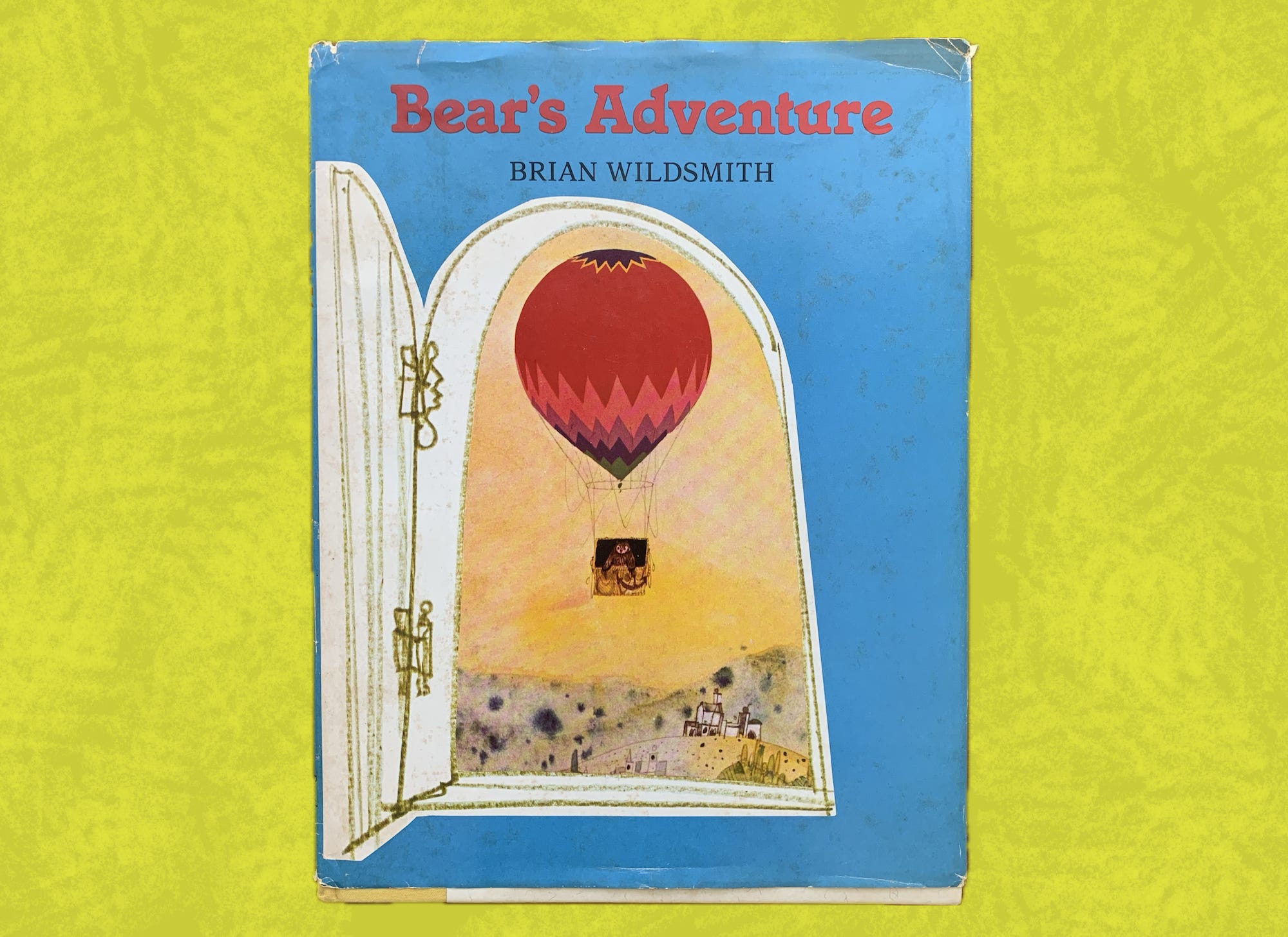
Bear’s Adventure by Brian Wildsmith 🐻
Bear’s Adventure cascades with one misunderstanding after another, plopping Bear into progressively silly scenarios. Brian Wildsmith’s matter-of-fact tone carefully balances out his kaleidoscopic illustrations of every bizarre moment that Bear gets into.
When I found this book at the library sale, I somehow hadn’t heard of Brian Wildsmith or that he’s considered one of the greatest children’s illustrators out there. His work had spanned several decades, and he was known for his delightful pairing of text and his rich, multicolored paintings. Bear’s Adventure was originally published in 1981 in the U.K. (Wildsmith was British), and I discovered my copy is the first printing of the first U.S. edition, published that same year!
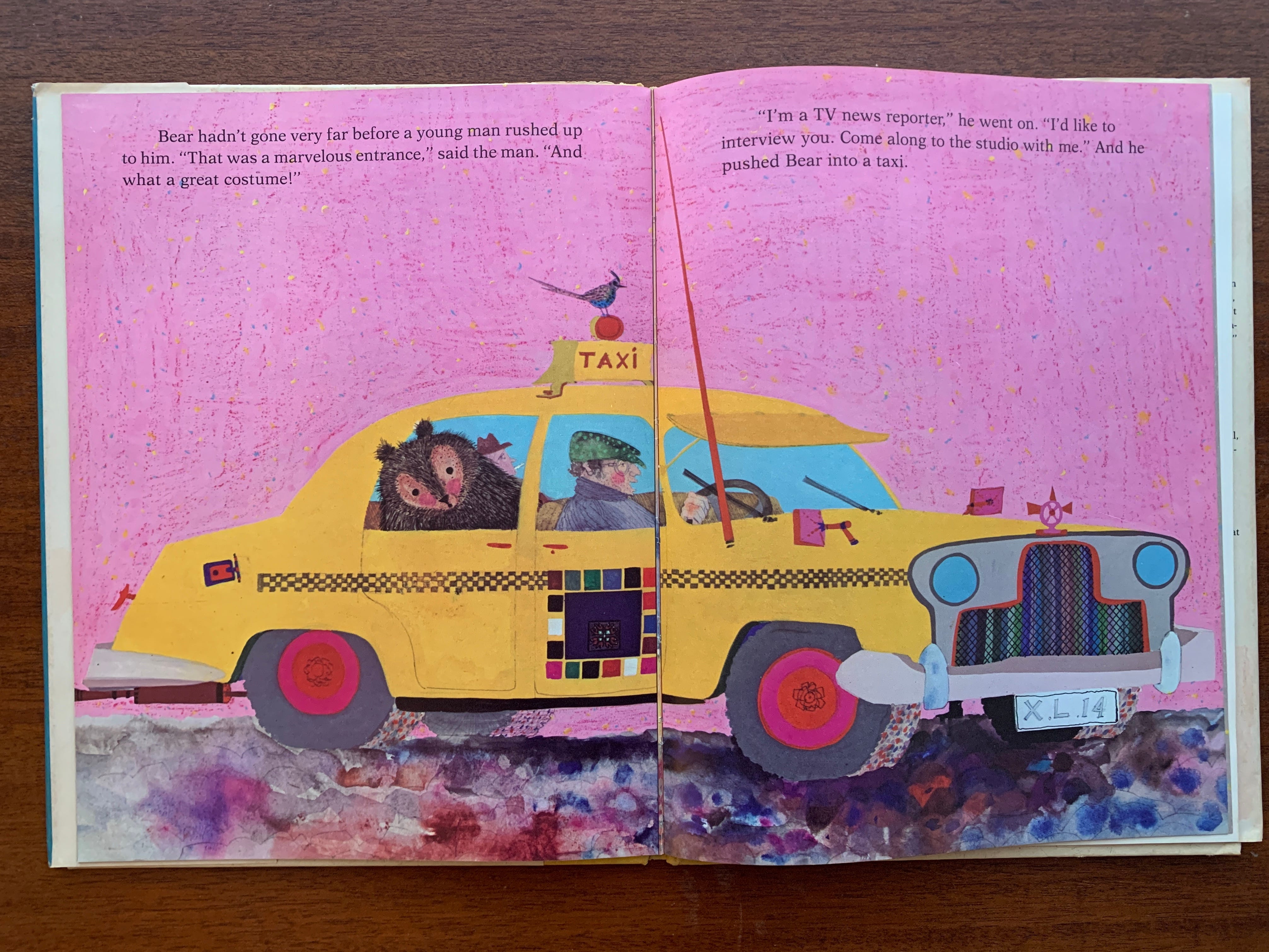
Intrigued by Wildsmith’s success, I listened to a 22-minute conversation between him and another painter, Gareth Morse, from 1978.5 When writing picture books, Wildsmith expressed that you must “seek the child within yourself” rather than talking down to children. He believed that the best way to teach children was to amuse them, and that “the child is usually best amused when it’s also involved.”
I especially liked hearing about his creative approach:
As I get older, I’ve discovered more how I work. And what I do now, is instead of sitting down at a page, a piece of paper, and working out 100 ideas and exhausting myself, what you do is—you go and dig the garden or sit drinking a glass of wine, just looking at the glorious scenery, until you really have solved in your mind exactly how to do that particular piece of work. And then you go and do it and you channel all your vital forces to that particular moment when you do it and there it is—it’s fresh, and, we hope original, and that’s it.
Two random observations from the clip: 1) Wildsmith was left-handed (same!) and 2) he’d occasionally smooth the middle of his spreads after a page turn like he’d done it many times before. This isn’t something I do when looking through books, so I thought it was a fun mannerism.
I’m officially on the lookout for any of Brian Wildsmith’s out-of-print books!
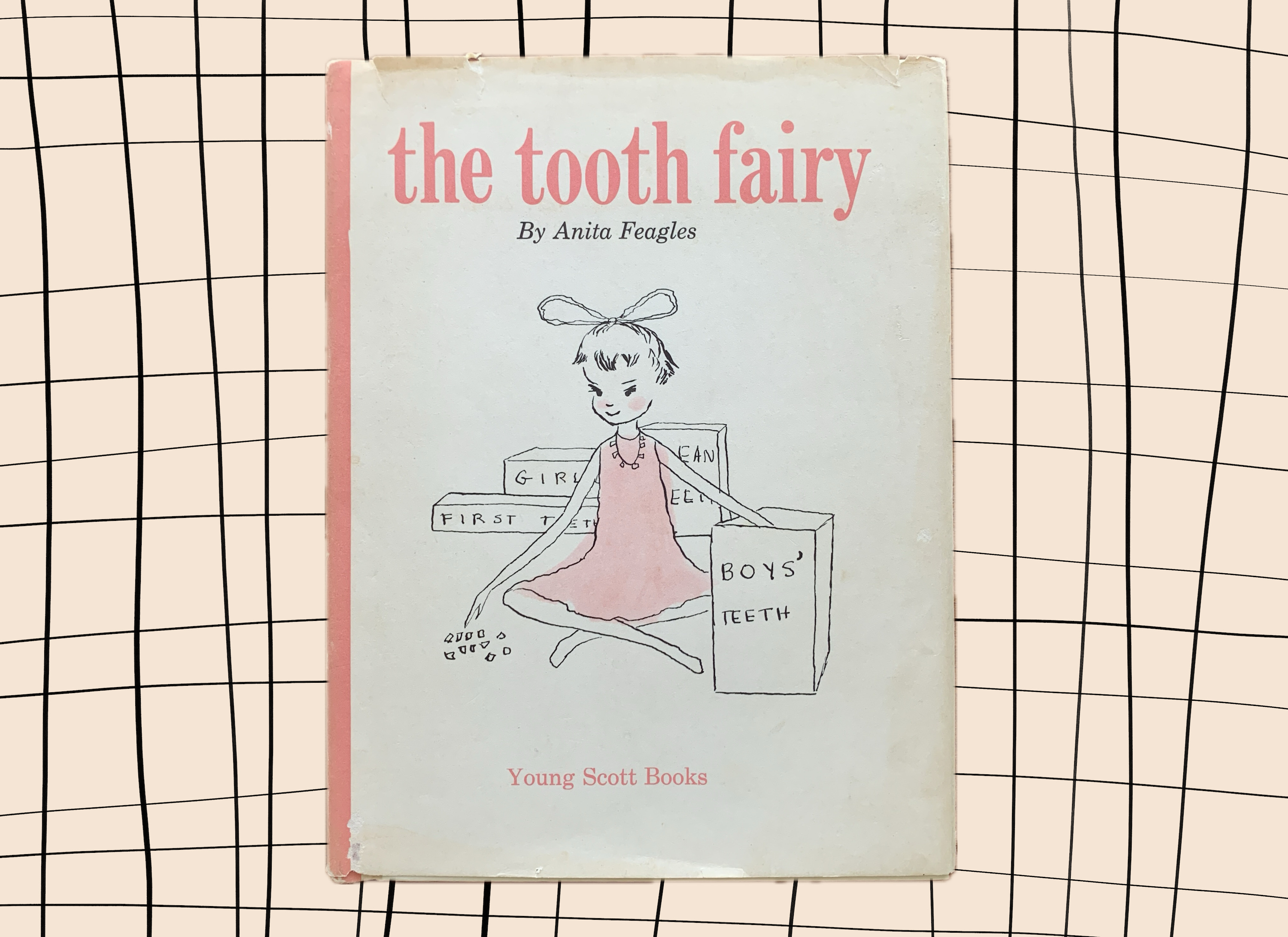
The Tooth Fairy by Anita Feagles 🦷
At 9.25” x 7.25”, The Tooth Fairy is a small, quick book. Anita Feagles uses a two-toned color palette with sketch-like illustrations. Visually, the pages are simple with lots of margins. And yet, the story doesn’t feel rushed—Feagles builds this steady profile of the tooth fairy as if she was as real as you and me, deserving of our attention.
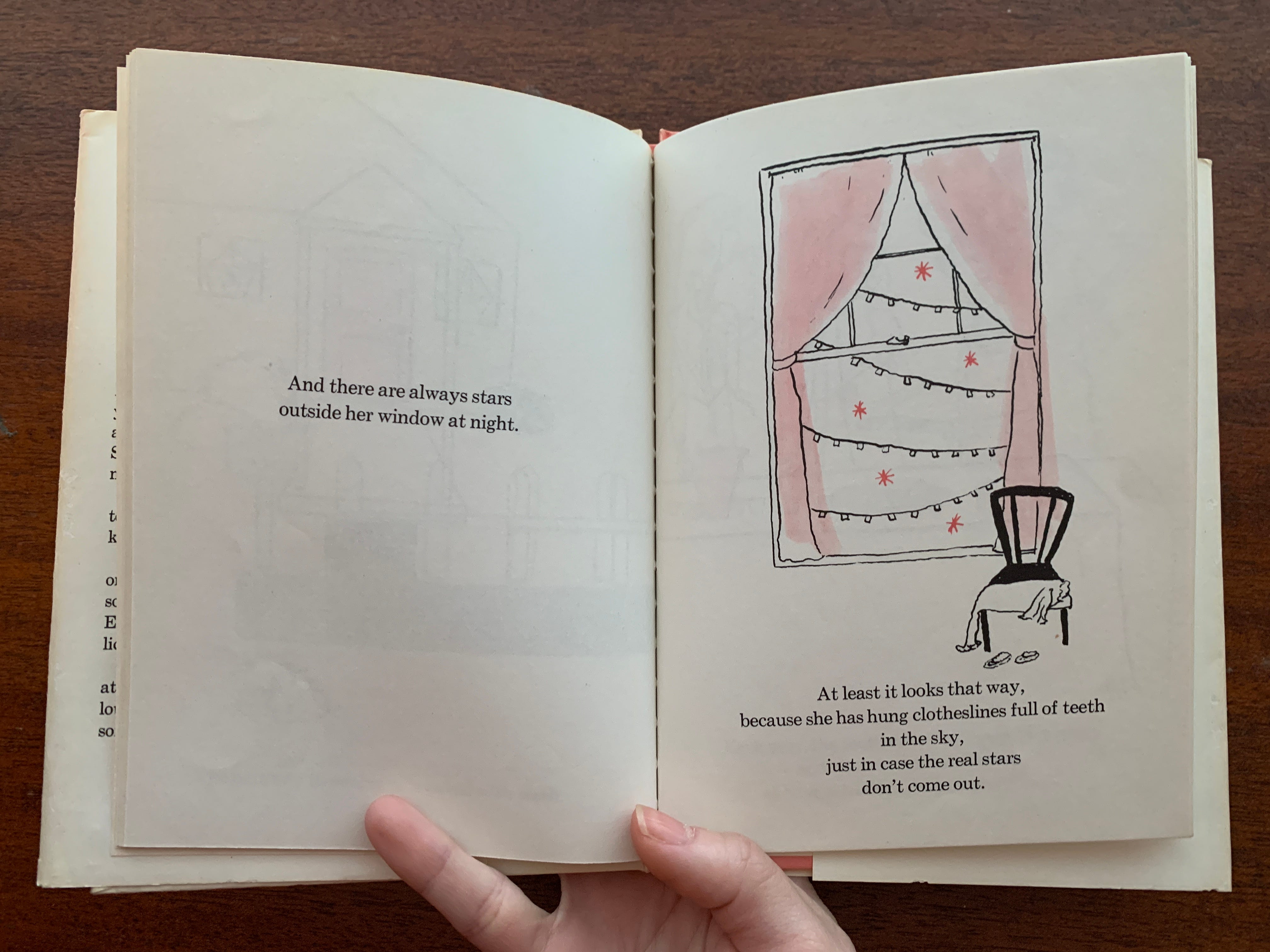
The narrator asks, Do you know why the tooth fairy likes teeth so much? and I don’t know why, but the answer makes me laugh every time. The answer is just so… unsentimental. Not at all what I’d expect. Maybe that’s why I love it?
My copy of The Tooth Fairy is the first printing of the first edition from 1962 and, I discovered, is considered a rare collectible! I bought it at the library for $1. Aside from the author’s bio on the dust jacket flap, the only information I could find about Anita Feagles was from her obituary online. It appears she published twenty books, most of which were for children.
This book reminds me how tricky it can be to say so much with so little. Feagles mastered it with this one. While I think publishers’ manuscript word count limits are too constraining these days, this book highlights how more words aren’t always necessary or better.
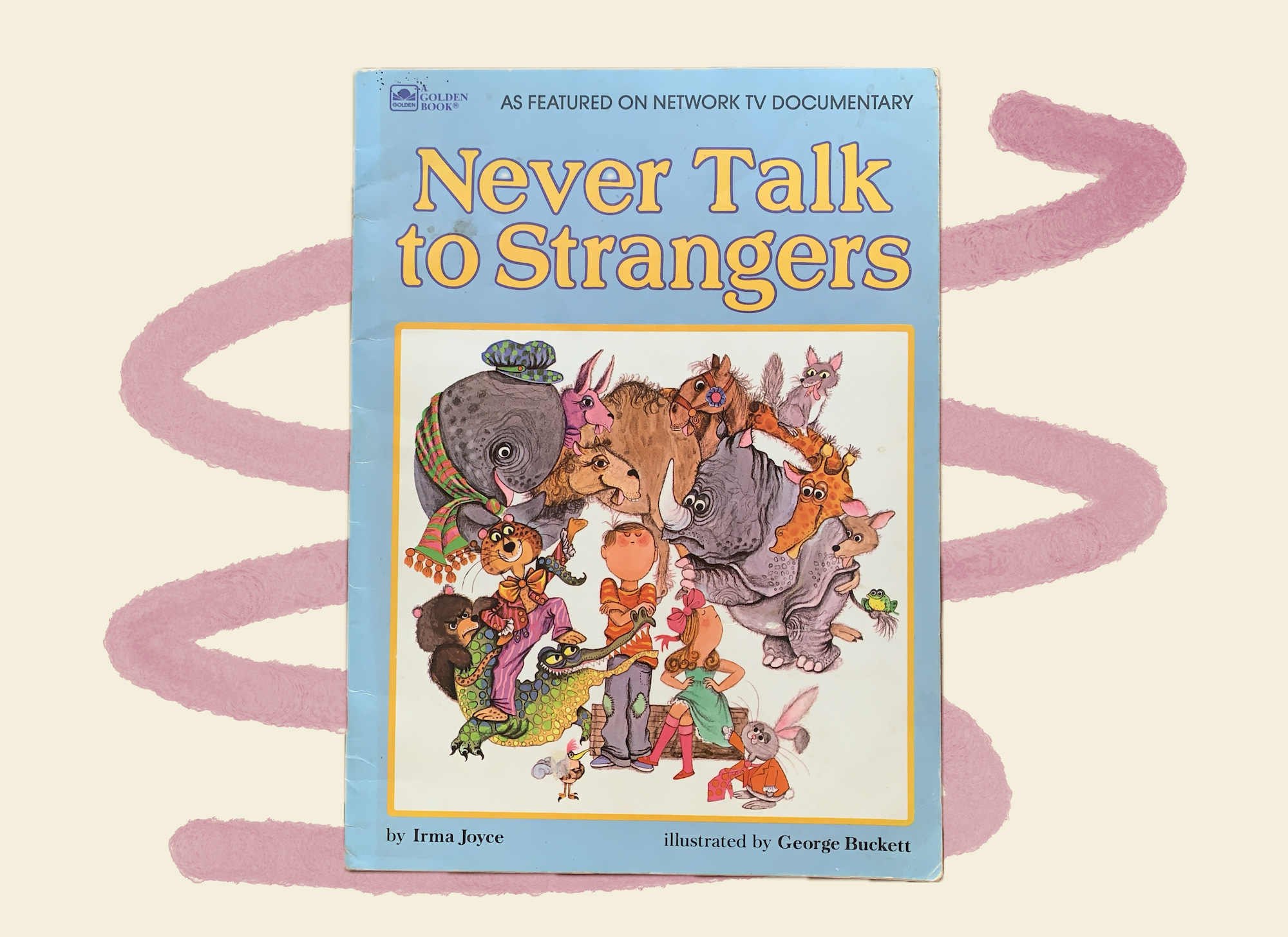
Never Talk to Strangers written by Irma Joyce & illustrated by George Buckett 🐋
I was immediately fascinated by this cover, so I bought the book without reading it. I’m a fan of mid-century illustrations, particularly if they’re quirky and colorful, and George Buckett’s art is all of those things.6 Buckett’s use of detail is undoubtedly impressive—fine lines, textures, patterns, specific facial expressions, etc. His animal characters have distinct personalities and shapes. There’s a dynamic quality to them. Yet, being biracial, it’s impossible to flip through the book and not notice the glaring lack of racial diversity (or any other kind of diversity for that matter). This is one of my biggest issues with mid-century illustrations.
Irma Joyce’s rhyming text is humorous and obviously outlandish, which I love. Similar to Bear’s Adventure, each unfolding scenario is odd and original. However, it’s not the approach I would’ve taken for a didactic story about a serious topic. With a book this amusing, I’m not sure how it’s supposed to teach kids about stranger safety. It seems like a stretch. I guess the message could spark conversation, and I’m certainly not saying every story that’s meant to educate must then be stiff or boring (remember what Brian Wildsmith said earlier?), but maybe this story from 1967 just didn’t age well for this century.
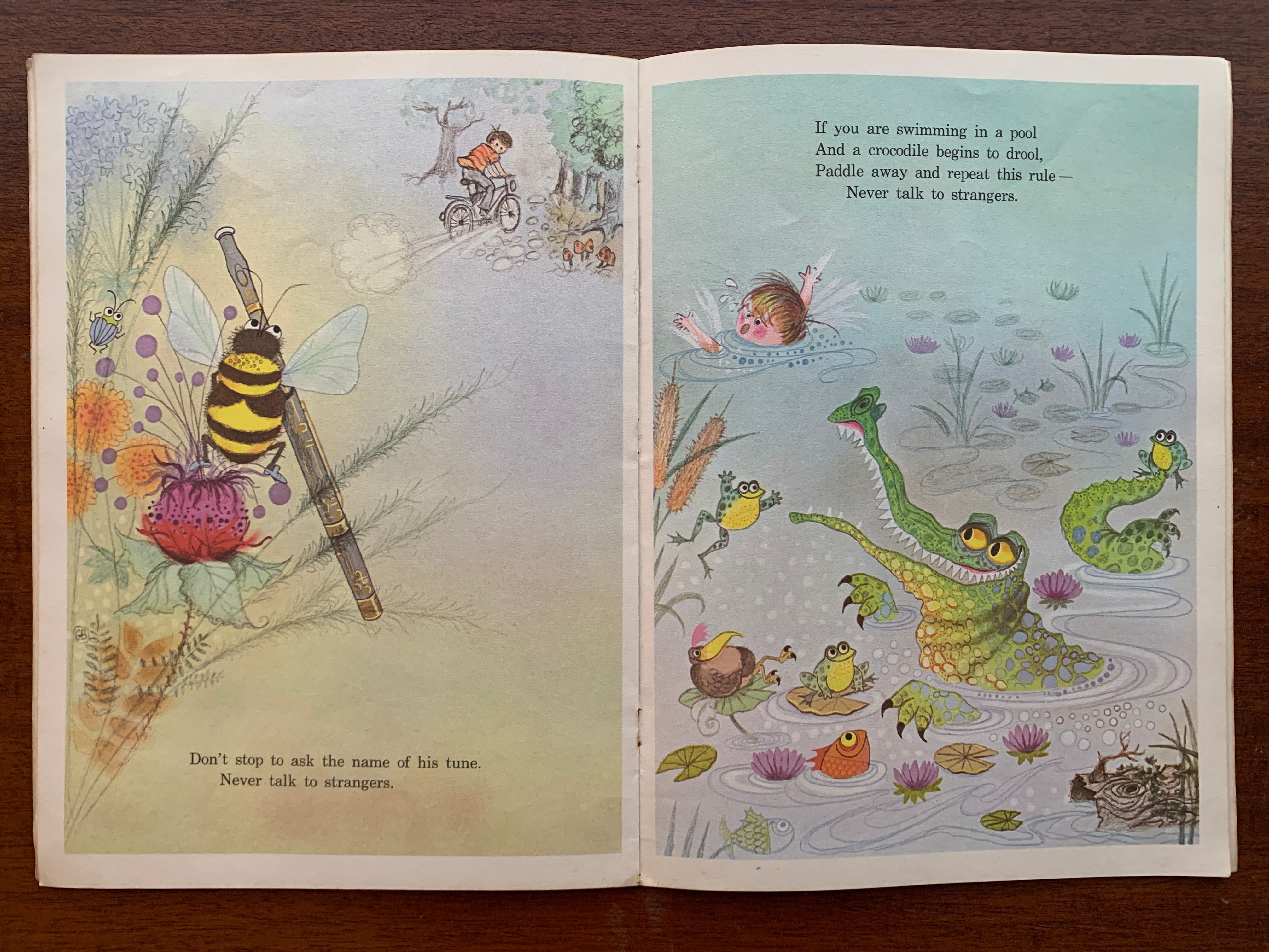
With those critiques, I’m sharing Never Talk to Strangers here because as I learn how to write picture books, I think it helps to have an un-romanticized view of whatever it is I’m studying and reading. My reflections here aren’t all glowing book recommendations, and they’re not meant to be.
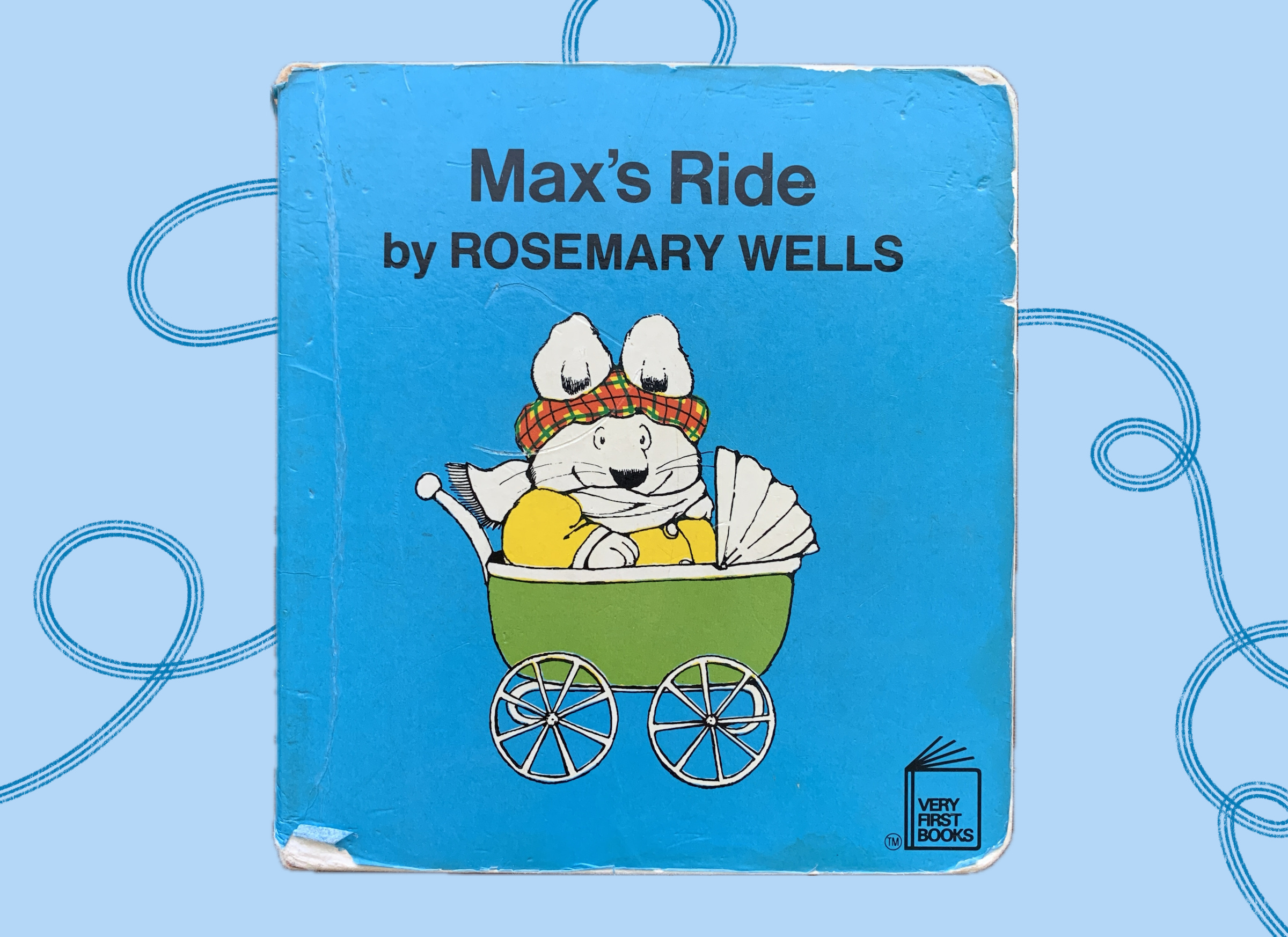
Max’s Ride by Rosemary Wells 🎡
Back in the spring, my stepson and I found a first printing of Max’s Ride from 1979. We’d dropped my mom off at a children’s book conference (a love of children’s books runs in the family) and went on a nature walk when we ran into a Little Free Library at the end of the trail. It was perfect timing, as we’d been working on positional words—exactly what this whirlwind board book is about.
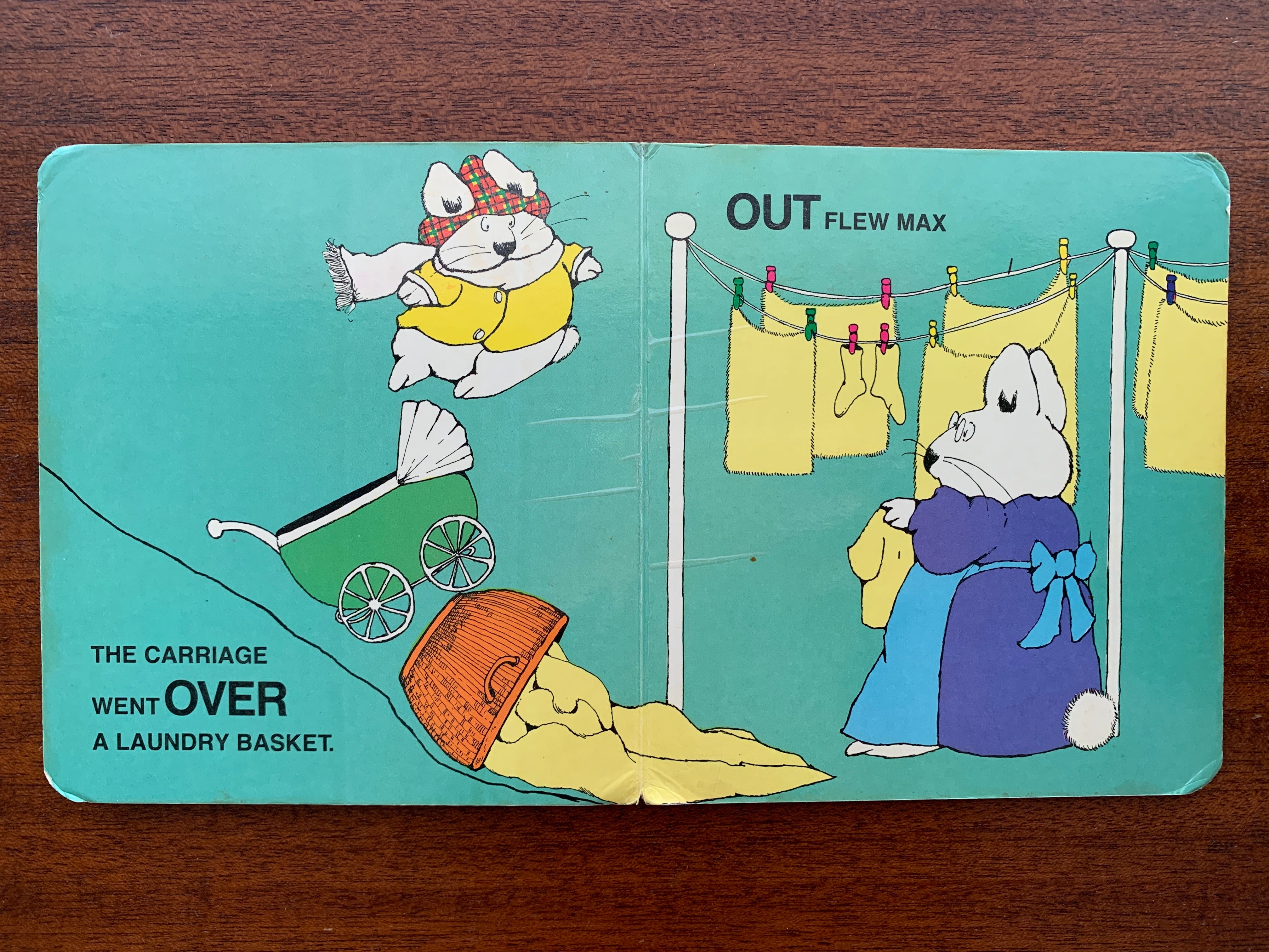
Max, the younger bunny sibling, is a recurring character in Rosemary Wells’ books and he is the same little brother from the Max & Ruby TV show.
I watched a video about the author-illustrator (I think it’s from 1994) where Wells described her story ideas as “birds that come to me on a ship at night.” Sometimes she’d have seven or eight of these ideas show up, and when they did, her job was to feed each one so they wouldn’t fly away:
[…] they come from their own place that has nothing to do with me. I never feel that they come from me, even though they very obviously do. I feel that they come to me. And all the ones that wind up between covers—that are good books—are the ones that come to me. And the ones that I try very hard to do are the ones that just never make it off my desk.
She also shared that the magic behind her children’s books was the result of repetitive, dedicated practice over years and years:
And there’s no way to teach your hand and your fingers, for example, to know how much paint and how much water are in the bristles of a brush after you dip them in. When you do this for ten hours a day, five days a week, for thirty years, you get so you can feel the paper through the hairs of the brush. I can feel how much color is on a brush with my hand without ever looking. I can just feel it.
This is the kind of long-term steadiness I want to apply to whatever it is that I write, create, or put out into the world. 📒
If you enjoyed today’s piece, feel free to click the heart or share it. That tiny act helps me connect with new readers. Thanks for supporting Nōto!
I have two library cards: one through my county’s public library system, the other through an independent municipal library. This way, I have a wider range of options and can check out more books at once!
You can find 40 picture books I enjoy on my website. I regularly update my virtual bookshelf.
I recently found this picture book proclamation and read it out loud to my husband. Sometimes we talk (or grumble) at length about how disheartening it is when the craft of writing is sacrificed for whatever is quick or easy to sell. That proclamation was signed by some of our most brilliant in children’s literature right now. And I’m just thankful it exists.
I’ve since discovered that people who take this hobby more seriously than me have specific preferences about conditions, trade editions vs library binding (just learned what this was yesterday), dust jackets, inscriptions, “bumping” (dents on book corners), etc. I do feel giddy when I find a first printing/first edition, otherwise, my priorities: a vintage book I like and a good price.
My quotes might not be 100% accurate because the VHS audio quality wasn’t great, but I listened over and over and at various speeds to quadruple-check.
I spotted George Buckett’s initials on multiple spreads and single pages. I wonder if this used to be standard practice for illustrators?
Such an enjoyable post! I also collect vintage children's books, they are so inspiring aren't they? Thanks for the Brian Wildsmith link!
I enjoyed reading about these four fascinating vintage books😊It made me want to go to library sales and used book stores to find gems like these! Love it, Erichan💕